
Quick Answer
Blackjack insurance is usually not worth it for casual players. It is a separate side bet that only wins if the dealer has blackjack. Even though it sounds protective, the math usually favors the casino.
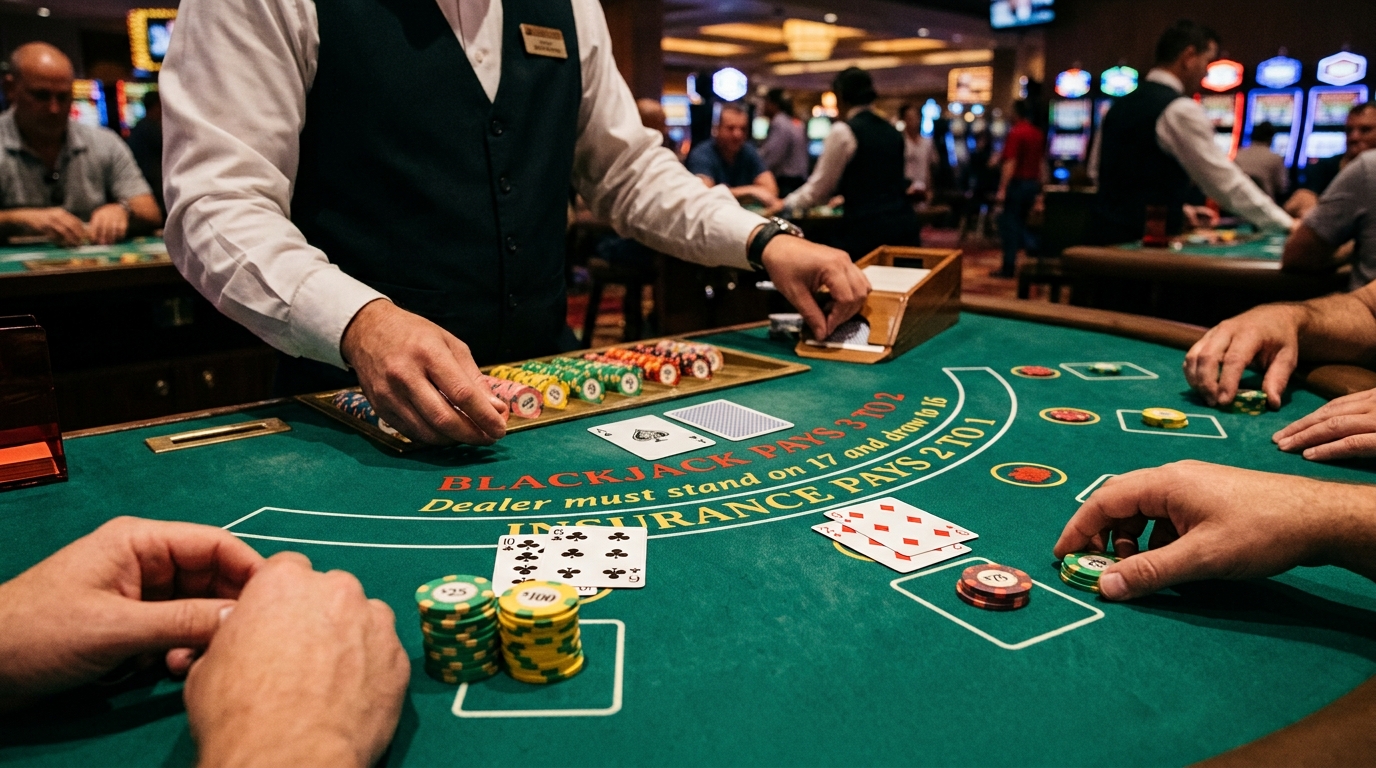
If you have sit down at a Blackjack table, you have seen or heard about Insurance. If you haven’t there was I time I too was clueless. Here is a quick breakdown for you. The dealer shows an Ace, the table goes oddly still, and someone asks if you want insurance. It sounds like a life jacket. Usually, it’s more like buying an umbrella after the storm has already picked a direction.
Blackjack insurance is a separate bet on the dealer having blackjack, not protection against every bad hand. Here’s the plain-English version, with real dollar examples.
Key Takeaways
- Insurance is offered when the dealer’s upcard is an Ace.
- You can usually bet up to half your original wager.
- It pays 2:1 only if the dealer’s hidden card is worth 10.
- Most casual players should decline it.
Blackjack Insurance Explained With Simple Examples
Insurance is a side bet that the dealer’s face-down card is a 10, Jack, Queen, or King. Those cards complete a dealer blackjack when the visible card is an Ace.
Simple Example
You bet $10 on your hand. The dealer shows an Ace. You place a $5 insurance bet.
If the dealer has blackjack, the insurance bet pays 2:1, giving you $10 in winnings plus your $5 stake back. Your original hand usually loses, so the insurance payout mostly offsets that loss.
Say you bet $10 on your hand. The dealer shows an Ace and offers insurance for up to $5. You put down the full $5.
If the hole card is a King, the dealer has blackjack. Your $5 insurance wager pays 2:1, so it returns $15 total, your $5 stake plus $10 in winnings. Your original $10 hand usually loses, but the insurance payout offsets it.
The two bets settle separately. You haven’t turned a losing hand into a normal blackjack win. You’ve plugged one hole in the boat.
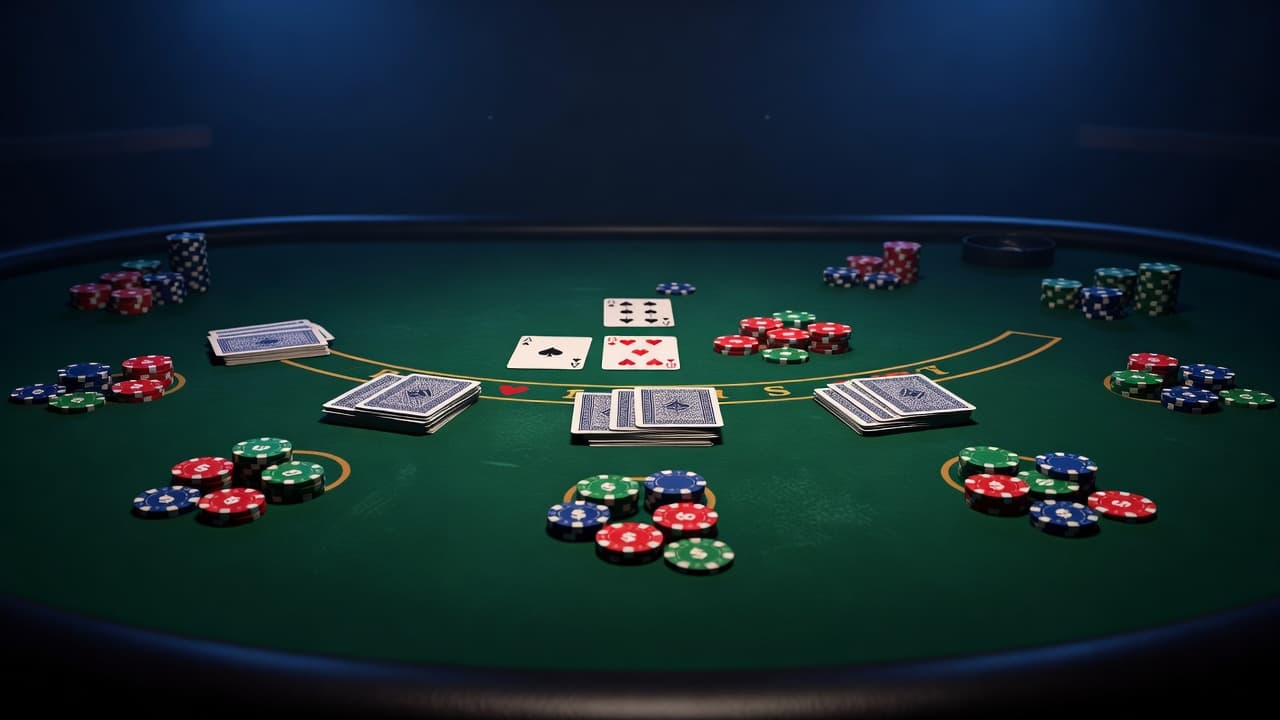
What if the dealer does not have blackjack?
Same $10 hand. Same $5 insurance bet. This time, the dealer’s hidden card is a 6.
Your $5 insurance bet loses immediately. Then the original hand continues under the usual blackjack rules. You may still win, lose, or push. The word “insurance” is doing a lot of flattering work here.
Payouts and limits can vary, so read the table felt and posted rules before tossing out chips.
Is Blackjack Insurance a Good Bet for Most Players?
For most players, no. Blackjack insurance pays 2:1, meaning the dealer needs a 10-value card often enough to make that price worthwhile. In an ordinary shoe, those cards are usually less common than the bet needs.
That gives insurance a house edge often around 7% to 8%, depending on deck count and rules. A dealer Ace is not a flashing sign that says, “Buy now.”
Why the Casino Likes This Bet
Insurance pays only when the dealer’s hidden card is worth 10. That sounds common because 10s, Jacks, Queens, and Kings all count. But the payout still does not usually match the real odds for ordinary players.
That is why blackjack insurance often carries a higher house edge than the main blackjack game.
A strong hand does not make insurance stronger. The insurance bet only cares about the dealer’s hidden card. Your hand could be great, awful, or somewhere in between. The side bet math stays the same.
Card counters may take insurance when they know many 10-value cards remain. Everyone else is guessing in a room built for guesses. If you’re playing blackjack in Tunica, or anywhere else, declining is the sound default.
Insurance is different from even money
If you have blackjack and the dealer shows an Ace, the dealer may offer even money. You take a guaranteed 1:1 payout instead of waiting to see the hole card.
Mathematically, it’s much like taking insurance. The packaging is different. Ask what the offer means before nodding along.
Even Money in Plain English
If you have blackjack and the dealer shows an Ace, even money gives you a guaranteed 1:1 payout instead of waiting to see if the dealer also has blackjack.
It feels different from insurance, but mathematically it works much the same way. You are giving up the chance at the normal blackjack payout to avoid the risk of a push.
How to Handle the Offer at a Real Casino Table
Wait for the dealer to announce insurance, then decide before the hole card is checked. Bet only the amount the table allows.
Don’t buy it because another player is shouting, or because the dealer has been on a heater. Keep the insurance chip separate in your head and on the felt.
Set your gambling budget before sitting down. Casino money should never eat into your room, meals, or ride home.
What to Do When Insurance Is Offered
- Pause and remember it is a separate side bet.
- Do not take it just because the dealer shows an Ace.
- Do not take it because another player at the table insists.
- Understand that even money is basically the same decision in different packaging.
- For casual blackjack play, declining is usually the smart default.
The Smart Move Is Usually to Pass
Blackjack insurance is a separate 2:1 bet that the dealer’s Ace hides a 10-value card. It can soften the blow of dealer blackjack, but it usually costs ordinary players more than it saves.
Decline it unless you understand the math and have a real reason not to. Enjoy the table, protect the bankroll, and leave the casino with the trip still intact.
This post may contain affiliate links. If you make a purchase through these links, I may earn a small commission at no extra cost to you.
Frequently Asked Questions About Blackjack Insurance
What is blackjack insurance?
Blackjack insurance is a separate side bet offered when the dealer shows an Ace. You are betting that the dealer’s hidden card is worth 10, which would give the dealer blackjack.
Does blackjack insurance protect my hand?
No. Insurance does not protect your original hand from every loss. It only pays if the dealer has blackjack. If the dealer does not have blackjack, the insurance bet loses and your regular hand continues.
How much can you bet on insurance in blackjack?
Most blackjack tables allow an insurance bet up to half of your original wager. For example, if your main bet is $20, the maximum insurance bet is usually $10.
How much does blackjack insurance pay?
Blackjack insurance usually pays 2:1. If you place a $5 insurance bet and the dealer has blackjack, you win $10 plus your $5 insurance stake back.
Is blackjack insurance a good bet?
For most casual players, blackjack insurance is not a good bet. The payout usually does not match the true odds closely enough, which gives the casino an edge over time.
Is even money the same as insurance?
Even money is not presented exactly the same way, but it is mathematically very similar. If you have blackjack and the dealer shows an Ace, taking even money gives you a guaranteed 1:1 payout instead of waiting to see whether the dealer also has blackjack.
Should beginners take blackjack insurance?
Beginners should usually decline blackjack insurance. Unless you understand card counting and have a clear reason to believe many 10-value cards remain, passing on insurance is the better default.