


To plan a luxury casino vacation on a budget, travel in shoulder weeks instead of weekends, join the resort’s loyalty program before you book, turn comps and free play into real savings, bundle flights, rooms, and shows, and keep your gambling money separate from your travel money. You get the same room for far less.
That’s the real opportunity in learning how to plan a luxury casino vacation on a budget. You’re not trading down to a lesser property or a smaller room. You’re buying the same room other guests are paying full price for, at a point in the pricing cycle, through a channel, and with a status level that gets you a fraction of the cost. The rest of this guide is the mechanics behind that: timing, loyalty tiers, comps, bundling, and keeping your gambling money separate from your travel money so the whole trip holds together financially.
Book the shoulder weeks: when room rates drop without the resort changing
Casino resorts run on occupancy, and occupancy swings hard across the calendar. Weekends, major conventions, fight nights, and holiday weeks push rates up because demand is high and the hotel knows it. Midweek stays, the weeks right after a big convention wraps, and the slower stretches of January, late summer, and parts of the fall tend to see rates drop, sometimes by half or more, because the hotel needs bodies in rooms and gamblers on the floor.

None of that changes what the resort offers. The pool, the spa, the suite category, and the casino floor are identical on a Tuesday in a slow week and a Saturday during a packed one. What changes is leverage: on a slow Tuesday, you have more of it than the hotel does.
A few practical habits help here:
- Check rates for a Tuesday through Thursday stay against the same room for a Friday through Sunday stay before you commit to dates.
- Look at what’s booked into the convention calendar for your target city and avoid weeks with major events unless you’re going specifically for one.
- Hold off on booking far in advance if your dates are flexible. Casino hotels often release better rates and packages closer to the stay once they can see how occupancy is actually filling in.
Shoulder-week booking alone can cover a meaningful chunk of what separates a “luxury on a budget” trip from a full-price one, before loyalty status or comps even enter the picture.
Join the loyalty program before you book a single room
This is the step that gets skipped most often, and it’s the one with the least effort attached to it. Every major casino resort company runs a loyalty program, and signing up costs nothing and takes a few minutes. The mistake is booking a room first and signing up for the loyalty account after you arrive, which forfeits the pricing and perks tied to status before you’ve had a chance to use them.
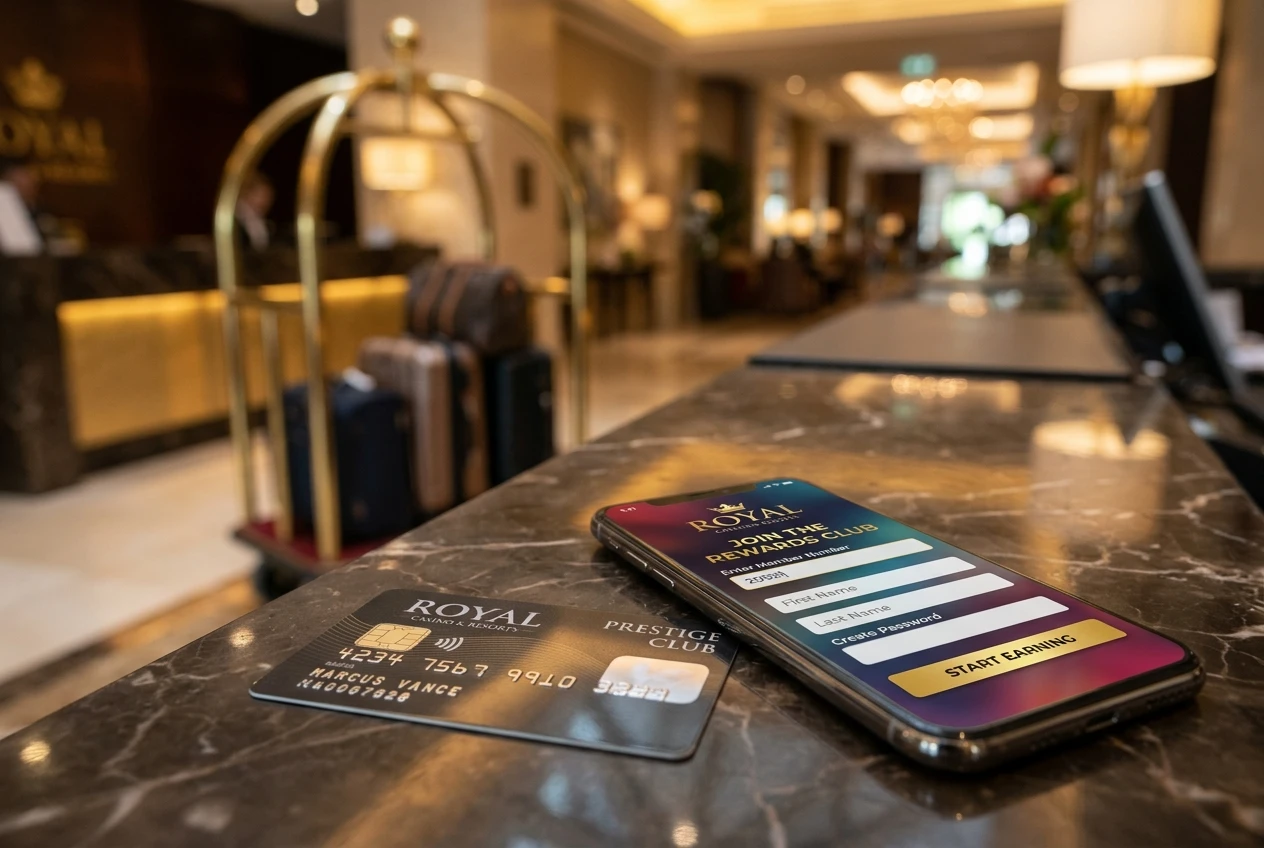
Loyalty tiers matter because casino resorts price rooms differently for members than for the general public, and that pricing gap widens as you move up tiers. Even entry-level status often unlocks a members-only room rate that’s lower than the public rate for the exact same room. Higher tiers add resort credit, free parking, room upgrades, and priority on everything from check-in lines to show tickets.
Status isn’t only built by gambling. Most programs award points or tier credits for room stays, dining charges, and spa visits too, so a trip booked and paid for through the loyalty account builds toward the next tier even if you never sit down at a table. Before booking anything:
- Create the loyalty account for the casino company you’re considering, not just the individual property.
- Check whether that company’s status has a match or fast-track option if you already hold status with a different casino brand.
- Book the room through the loyalty program’s own site or app rather than a third-party travel site, since status rates and point earnings usually don’t apply to third-party bookings.
Turn comps and free play into real savings, not just gambling perks
Comps get framed as a reward for gambling, and at the higher tiers that’s accurate. But a surprising amount of comp value is available to travelers who gamble modestly or not much at all, and it’s worth collecting on purpose rather than treating as a bonus that might show up.
Free play, which is casino credit you can use on slots or table games, functions as cash toward your entertainment budget once you understand it’s not a trick to get you to spend more. If the casino gives you $50 in free play and you use it to play out a session you were going to play anyway, that’s $50 you didn’t take out of your own pocket.

Resort credit works differently from free play. It’s typically a dollar amount applied to your room folio that you can use for dining, spa services, or incidentals, and it doesn’t require stepping onto the casino floor at all. This is where the “luxury without the luxury bill” math really shows up: a tier that comes with $100 to $200 in resort credit effectively discounts a spa afternoon or a steakhouse dinner you were going to book regardless.
A few things worth checking before you travel:
- Ask your loyalty program, by phone or through the app, what comps and offers are attached to your account before the trip, rather than waiting to be offered something at check-in.
- Confirm whether resort credit expires at checkout or can be used across your whole stay.
- Read how a resort prices its on-site dining and drinks before assuming comps there stretch as far as they would elsewhere; the MGM Grand Las Vegas dining guide breaks down what a meal actually costs at one major property, which is useful for sizing up whether a dining comp is worth much in practice.
Bundle flights, rooms, and shows instead of booking them separately
Casino resort companies and the travel sites that sell their packages make a meaningful margin on bundles, and a chunk of that margin gets passed back to the traveler in the form of a lower combined price than booking each piece on its own. A flight, a room, and a show ticket bought separately will almost always add up to more than the same three things bought as one package, because the resort would rather guarantee a guest who’s locked into dining, gambling, and show spending on-site than let that traveler piece together the cheapest version from five different vendors.
Shows are a particularly good bundling target because they’re priced steeply at the box office and far more reasonably as part of a package deal. If a show is already part of your plan for the trip, it’s worth pricing it both ways, on its own and bundled with the room, before buying tickets separately.
Before bundling anything, confirm the package actually includes the room category, the dates, and the show or amenity you want, since some bundles default to a lower room tier than you’d choose on your own. If live entertainment is part of your plan, the site’s guide to the best shows in Las Vegas is worth a look for sizing up which shows tend to deliver the most value against their ticket price.
Draw a hard line between your travel budget and your gambling budget
The pricing tactics above, shoulder weeks, loyalty status, comps, bundles, are all about getting a genuinely upscale trip for less money. None of that matters if the savings get absorbed back into the casino floor because the travel budget and the gambling budget were never kept separate in the first place.
Set a number for travel, covering flights, room, dining, and shows, and a completely separate number for gambling, and treat the two as unrelated pools of money. A savings win on the room rate isn’t found money for the tables; it’s the trip costing less, full stop. Deciding on your gambling limit before you arrive, and sticking to it once the trip starts, matters enough that it’s worth reading through separately: the guide on knowing when to quit gambling covers how to protect both your money and your trip once you’re on the floor.
Eat and drink like a high roller without the high roller bill
On-property fine dining at a luxury casino resort is priced for convenience and captive demand, and a full-price dinner at a signature steakhouse can rival the cost of the room itself. The way around that isn’t skipping the experience, it’s being selective about when you pay full price for it.

Resort credit and dining comps, where available, should go toward the most expensive meal on your list rather than getting spread thin across minor charges. Lunch and brunch menus at the same high-end restaurants are often priced well below their dinner menus for comparable food, which is worth checking before assuming a signature restaurant is out of reach. And stepping off-property for a coffee or a casual meal between the splurges keeps the daily spend from compounding; the site’s guide to finding coffee shops near casinos is a practical starting point for that.
Before locking in dates, compare current casino package deals side by side so the loyalty and bundling tactics above actually pay off.
