
Your First Visit To The Casino
Your first casino visit can make a $15 blackjack table feel like a stage, with bright lights, quick hands, and strangers who seem born knowing what to do. The good news is that casino etiquette is mostly common sense, plus a few particular rules.
You don’t need to act like a high roller. You need to be polite, pay attention, and know when your hands, phone, and opinions should stay out of the way.
The casino floor gets much easier once you learn its rhythm.
This post may contain affiliate links. If you make a purchase through these links, I may earn a small commission at no extra cost to you.
Key Takeaways
- Bring valid photo ID, check the casino dress code, and compare table minimums with your gambling budget before you sit down.
- Watch a round first, follow the dealer’s instructions, and use clear hand signals when playing blackjack or other table games.
- Keep your hands, phone, opinions, and alcohol consumption under control so you do not disrupt the game or other guests.
- Set separate limits for gambling money and time, treat tips as optional, and leave when your session budget is gone.
- When in doubt, ask the dealer or pit boss. Calm, visible, and respectful behavior matters more than looking experienced.
First-Time Casino Table Cheat Sheet
A few simple habits can make a casino table feel much less intimidating.
Do this
- Watch a few rounds before sitting down.
- Check the table minimum first.
- Wait for the dealer’s cue.
- Ask short questions during a natural pause.
Avoid this
- Touching another player’s cards or chips.
- Buying in while a hand or spin is underway.
- Giving advice unless someone asks.
- Using your phone at the wrong time.
Casino Etiquette Starts Before You Reach the Table
Bring a current government-issued photo ID. Casinos may check it at the door, at the cashier cage, when serving alcohol, or when you collect a jackpot. Gambling and drinking ages vary by local law, so don’t assume the rules from your last vacation apply here.
The casino dress code varies by property too. Most casinos are comfortable with clean, smart-casual clothing: neat jeans or trousers, a decent shirt, and shoes you can walk in. An upscale resort, nightclub, or restaurant may expect more, so check that venue’s specific casino dress code before you go. The goal isn’t to look rich. It’s to look like you remembered you were leaving the hotel room.
Before you sit down, take one slow lap around the casino floor. Watch the available table games for a minute. Find the betting minimum, notice whether the table is crowded, and listen to the dealer’s pace. Compare the table minimums with your budget before choosing where to play. That tiny pause saves a lot of awkward “Wait, what do I do?” energy.
Tribal casinos, riverboat casinos, and Las Vegas resorts can handle small details differently, so house rules control the table. If you aren’t sure, ask the dealer or pit boss before buying in. Casino surveillance routinely records buy-ins and table activity. Those routine checks apply to everyone; they don’t mean the casino assumes a new player is a card counter.
When a seat opens, wait until the current hand ends. Put your cash flat on the felt, inside your betting circle, in front of your betting spot. Never hand cash directly to the dealer. They will spread it, count it in view of security cameras, and exchange it for chips. Ask about chip denominations if you’re unsure what each color is worth.
The dealer isn’t being fussy when they follow a procedure. Those clear, repeatable motions support game protection and protect you, the game, and everyone else’s money.
Casino Mike
The Right Time to Act at a Casino Table
Timing matters. Waiting for the right moment keeps the game moving and prevents awkward mistakes.
During active play
Keep your hands still, avoid late bets, and do not interrupt the dealer with questions.
During a natural pause
This is the better time to buy chips, ask a short question, or get clarification about the rules.
When the dealer gives a cue
Follow the dealer’s instructions about hand signals, cards, bets, and when play resumes.
Blackjack Table Etiquette Without the Panic

Blackjack moves fast, which is why blackjack table etiquette has such a firm little script. Learn it, and you will look far more comfortable than the guy loudly explaining probabilities after every hand. Even a seasoned player follows the same table manners.
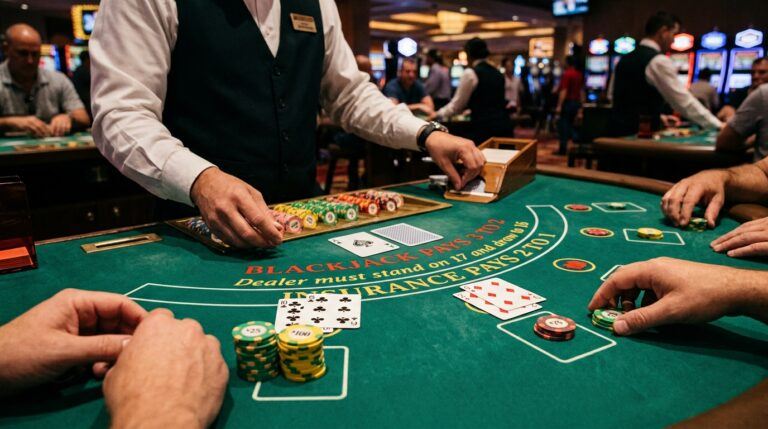
At a game using a shoe of cards, blackjack table etiquette starts with clear words and visible hand signals. Cameras need a clear record of your choice for game protection.
Blackjack Hand Signals
| If you want to… | Do this |
|---|---|
| Hit | Tap the felt behind your cards with one finger. |
| Stand | Wave your open hand horizontally over the cards. |
| Double down | Put an equal stack of chips beside your original bet. |
| Split cards | Put an equal stack beside the original bet, then tell the dealer you want to split. |
Clear signals and controlled chip placement are the basic ways to handle cards and chips at the table. Those documented choices are separate from advantage play, whether you are a casual player or a seasoned player.
Once the hand begins, blackjack table etiquette means don’t touch your chips or cards unless the dealer tells you otherwise. In face-down games, the dealer will explain whether you may hold cards, usually with one hand. A seasoned follows those limits. Follow their lead, not a movie scene in your head.
A couple of rules matter more than people realize:
- Keep your chips inside your betting circle and place bets before the dealer says no more bets.
- Don’t reach toward the discard tray, dealer’s chip rack, or another player’s cards.
- Make decisions for your own hand. Don’t tell strangers to hit, stand, split cards, or double down unless they ask.
The old “third base ruined the shoe” complaint has been inflated into casino folklore. A player, even a card counter, may annoy the table with a strange choice, but cannot steal another player’s win. Still, basic strategy is a better companion than chaos. This beginner discussion of table-game etiquette catches the social side of that argument well.
If the motions feel strange, watch one round before joining. A short table-game etiquette video can make the motions familiar before you arrive and help you follow blackjack table etiquette.
Craps, Roulette, and Poker Have Their Own Mood
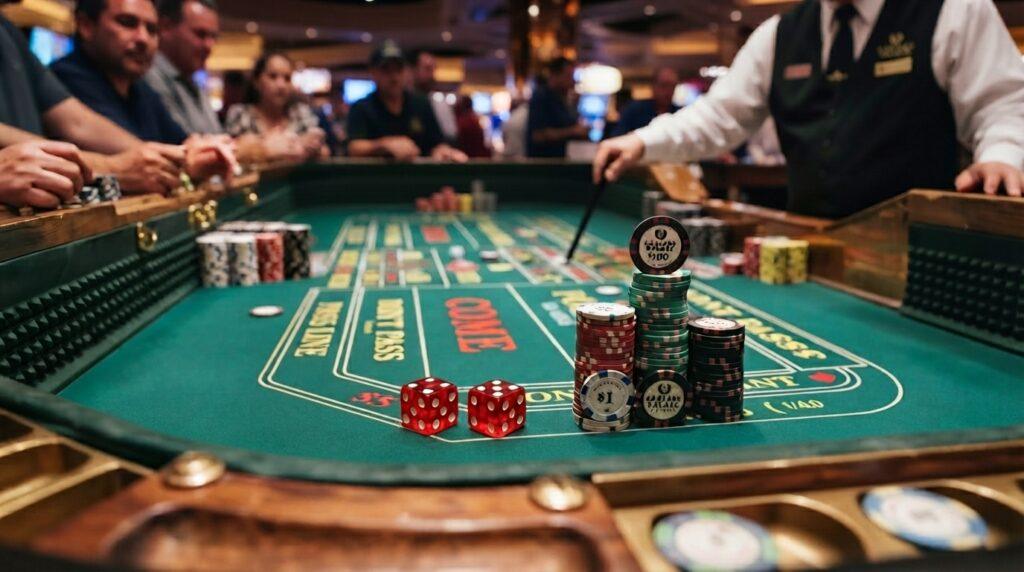
Craps, roulette, and poker are different table games, each with its own rhythm. Good table game etiquette means learning those expectations before you jump in.
Craps is loud, packed, and covered in betting boxes that can make a first-timer feel like they entered a small financial emergency. Relax. Pick one simple bet, tell the dealer what you want, and keep your hands clear once the dice are in play.
If you shoot dice, use one hand and throw them hard enough to reach the far wall. Don’t slide them, drop them, or launch them like you’re auditioning for a baseball team. Most casinos require the dice to hit the far wall to keep the roll honest.
Many players avoid saying “seven” while a point is on. Avoiding it is one of the table’s unwritten rules, and it’s superstition, not law. Local house rules take priority, so there’s no need to test the room’s spiritual stability on your first visit.
At roulette, buy in with cash placed on the layout, then wait for the dealer to give you colored chips. Those colors identify your bets. Don’t touch the layout after the dealer calls no more bets. When the ball lands, let the dealer clear losing wagers before you reach in for anything.
Poker has a different temperature, and player etiquette starts with acting only when it’s your turn. Keep one chip or protector on your cards so the dealer knows your hand is live. Don’t describe a folded hand while other players are deciding, and don’t splash the pot by tossing chips wildly into the middle. Put them in front of you where the dealer can count them.
Slots, Phones, Alcohol, and Casino Tipping Etiquette Without Being That Person
Slot etiquette is simpler, but the rules still exist. Don’t save a machine in the slot machine areas for half an hour with a jacket, a drink, or a players card. If you step away, cash out and take your voucher. Another person may be waiting for that machine, and nobody wants to negotiate over an empty chair.
Keep your volume down. Celebrate a win, absolutely. But pounding the screen, yelling at strangers, or occupying two machines with bags is lousy behavior. The same goes for smoking or vaping outside marked areas.
Cell phones are a hard line at table games. Put yours away before sitting down. Calls, texting, photos, video, and screen recording can disrupt play, trigger casino surveillance review, and raise game protection concerns. These rules apply to every guest, not only a seasoned player. If you need to answer something, step away from the table. Don’t photograph dealers, other guests, chips, or cards without permission.
Alcohol can make the night feel looser, then make your decisions worse. Drink water. Eat something. If you can’t follow the hand, read your chips, or remember your limit, stop gambling. The casino will still be there after a walk outside.
Casino tipping etiquette is customary, but it isn’t a mandatory fee. Use this as a comfortable starting point for dealer tips:
A Simple Casino Tipping Guide
Tipping is common at casino tables, but it is not required. Use your budget and the situation to decide what feels appropriate.
| Service | Typical Tip |
|---|---|
| Cocktail waitresses | $1 to $2 per drink |
| Dealer after a good win | $1 to $5, or a small bet placed for the dealer |
| Dealer after a helpful session | Around $5 to $10 when it fits your budget |
These are common U.S. casino tipping guidelines, not fixed fees. Practices can vary by property. For additional context, see this casino tipping guide from the Las Vegas Review-Journal .
Some sources on casino tipping etiquette suggest using 5% to 10% of winnings as a benchmark. That can become ridiculous after a big payout. A modest, sincere tip is fine. You are not required to empty your wallet because a hand went your way.
Keep Your Bankroll Separate From the Rest of the Trip
Good casino etiquette means knowing your limits and controlling your own behavior. Nobody enjoys the player who is angry, borrowing money, or trying to turn dinner funds into a comeback story.
Set a gambling budget before you leave the room. Keep money for food, transportation, hotel charges, and the ride home in a separate pocket, account, or envelope. Casino tipping etiquette means treating tips as optional entertainment spending within that bankroll, not a debt or reason to continue. A casino marker is borrowed gambling money, not a resort perk or clever shortcut. Bills remain painfully real after the table goes cold.
If you join a players club, use the card whenever you play. Casinos often base future comps on theoretical loss, which considers your average wager, game speed, and time played. It is a rebate on expected casino revenue, not a prize for losing money. Don’t gamble extra hours chasing a buffet coupon. That is rotten math.
Set a time limit too. Use a phone alarm before you sit down, then put the phone away. When your session money is gone, leave the table. Get a meal. See a show. Walk through the hotel lobby and remember the resort contains more than felt, flashing lights, and a machine asking for one more bill.
For a fuller reset plan, read Casino Mike’s guide to when to walk away from the table. If gambling feels secretive, stressful, or impossible to stop, support is available through the National Problem Gambling Helpline at 1-800-MY-RESET.
Frequently Asked Questions
Do I need to dress up to visit a casino?
Most casinos accept clean, smart-casual clothing such as neat jeans, a decent shirt, and comfortable shoes. Upscale resorts, restaurants, or nightclubs may have stricter requirements, so check the property’s dress code first.
Can I use my phone at a casino table?
It is best to put your phone away before sitting down at a table game. Calls, texting, photographs, video, and screen recording can disrupt play and create game protection concerns.
How should I buy chips at a table game?
Place your cash flat on the felt inside the betting area and never hand it directly to the dealer. The dealer will count it in view of the cameras and exchange it for chips.
How much should I tip a casino dealer?
Tipping is customary but optional, and a modest amount is usually appropriate. Around $1 to $5 after a good win or $5 to $10 after a helpful session is a comfortable starting point.
What should I do if I do not know how to play?
Watch one round before joining and ask the dealer or pit boss to explain anything unclear. Follow the table’s signals and house rules rather than guessing or copying something from a movie.
How to Ask a Dealer for Help
Dealers answer beginner questions all the time. The key is asking at the right moment and keeping the question brief.
- Wait for a pause Ask between hands or during a natural break in the action.
- Ask one clear question Avoid turning an active hand into a long explanation.
- Follow the table rules House rules can vary, so listen when the dealer explains what to do.
Need to text, take a call, or check something on your phone? Step away from the live table first.
The Best Casino Etiquette Is Simple Respect
A casino runs on routines: clear bets, calm hands, brief decisions, and respect for everyone working around you. Watch first, ask when needed, and don’t mistake confidence for loudness.
The point isn’t to look like you have done this a hundred times. Casino etiquette is about making the room easier to share. That applies to beginners, experienced players, and a card counter alike. Keep your own night fun, affordable, and free of unnecessary nonsense.