
Vegas can turn a $20 “quick stop” into a long, blurry night of slot sounds, cocktail receipts, and the sudden realization that your cash has vanished. A Vegas gambling budget keeps the casino floor fun without letting it eat the money meant for your hotel, flight home, or Sunday brunch.
There isn’t one magic number for how much money to bring to Vegas. The right amount depends on your trip length, the games you play, and how much losing you can comfortably treat as the price of entertainment. Start with the money that must survive the trip, then decide what you’re happy to risk. Never choose gambling as a way to make money, because Vegas was not built on winners.
Quick Answer
For a casual Las Vegas trip, many visitors can plan around $100 to $200 per day for gambling. Table-game players may need closer to $250 to $300 per day, especially if they plan to play $15 to $25 minimum tables. The safest budget is the amount you can lose completely without touching hotel, food, transportation, or emergency money.
Key Takeaways
- Set your gambling money after covering the hotel, food, transport, tips, and an emergency buffer.
- Casual players can often plan around $100 to $200 per day, while table-game sessions may need more.
- Split the total into daily or session limits, rather than carrying one tempting pile of cash.
- A resort credit, free play offer, or future comp is not extra gambling cash.
- Once the gambling fund is gone, the session is over. Don’t chase it with a credit card, ATM withdrawal, or casino marker.
How to Set a Vegas Gambling Budget Before You Go
A sensible Vegas gambling budget begins with one blunt question: “If I lose every dollar of this, will I still be okay when I get home?” If the answer is no, lower the number. The casino is entertainment, not a side hustle with flashing lights.
First, total the non-gambling costs. Include your room balance, resort fees, meals, airport rides, shows, tips, parking, and a little room for the expensive nonsense Vegas produces on command. Then set aside an emergency cushion that stays untouched.
Only then do you choose a bankroll.
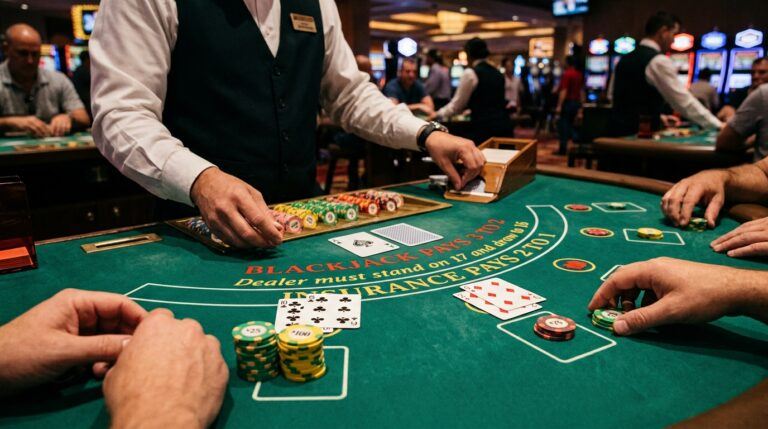
For a low-key trip, $100 per day may be enough for a few slot sessions, low-limit roulette, or one short blackjack visit. If you want regular table time, $250 to $300 per day is more realistic. Table minimums can rise fast on weekends, especially on the Strip, and a $15 minimum blackjack table burns through a small stack much faster than people expect.
Published opinions vary because everyone’s trip is different. In one Vegas gambling budget discussion, travelers throw out figures from a few hundred dollars to much more. That range is not helpful until you decide how long you plan to play and what losing feels acceptable to you.

The point is not to bring enough money to survive a bad run. Bad runs can always get worse. Bring enough to enjoy the kind of gambling you planned, then let the limit do its job.
Your bankroll is not a challenge from Vegas. It is the admission price you chose before the casino had a chance to talk you into more.
Keep Gambling Money Away From Travel Essentials
Vegas hotel check-in can deliver a nasty little surprise. The room rate is one number. Resort fees, taxes, and an incidental hold are separate creatures. Many properties place holds around $100 to $150 per night, although the real amount depends on the hotel, room type, and payment method.
That hold is usually temporary, but it can still lock up real spending money. A $150 nightly authorization on a four-night stay means $600 may be unavailable before you see a single blackjack shoe. Using a credit card with available room is often easier than using a debit card tied to your food and rideshare money.
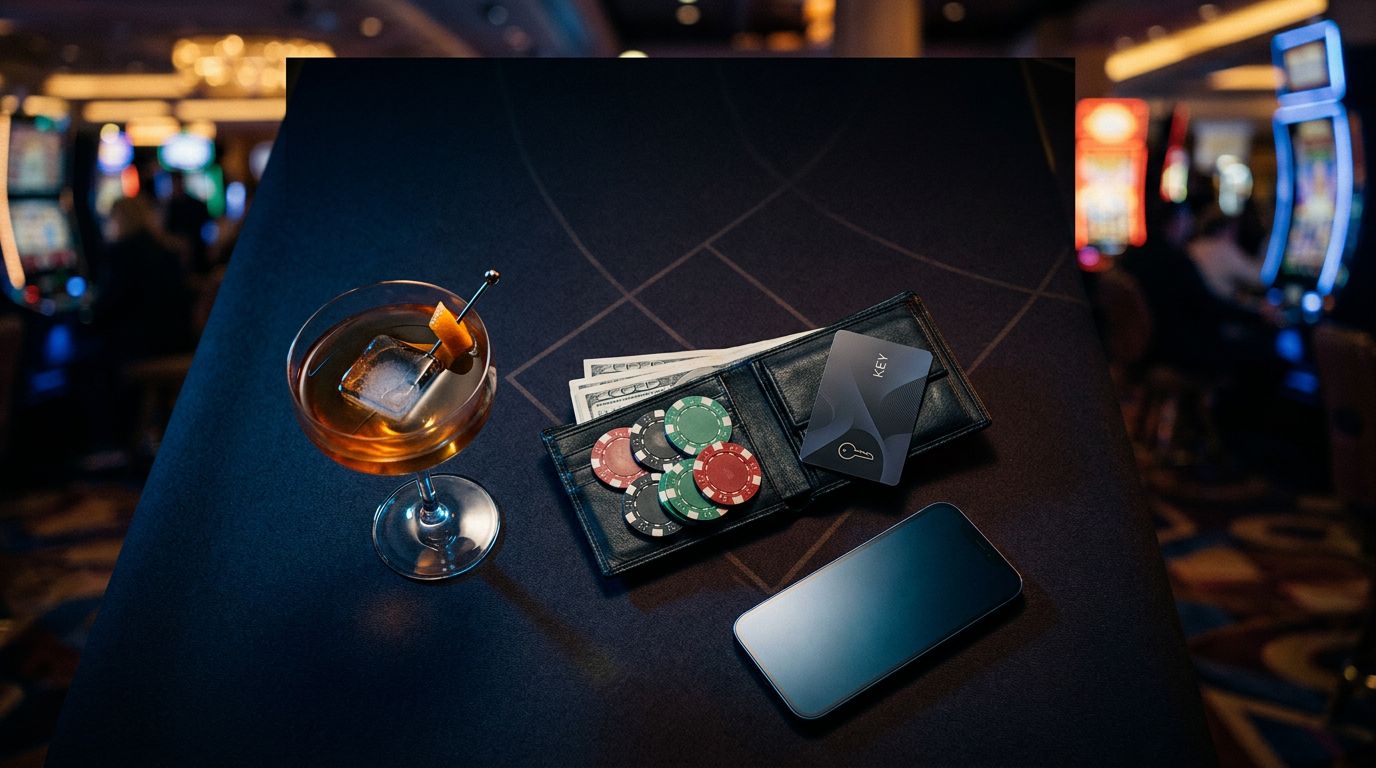
Put your trip money into separate buckets before departure:
- Travel essentials: hotel charges, meals, transport, tips, and emergency cash.
- Gambling bankroll: the amount you can lose without borrowing from the first bucket.
- Small daily cash: useful for coffee, valet, housekeeping, and the random moments when you don’t want to break a large bill.
Your gambling bankroll should never patch a hotel hold, and the hotel hold should never become an excuse to gamble on credit. For practical details on cards, cash, chargers, and small bills, use this guide to managing travel cash and cards.
A $100 resort credit also belongs in its own mental bucket. It may cover an eligible meal or spa charge. It usually cannot become chips, cash, sports bets, or an ATM withdrawal. Same story with free play. Nice perk, different lane.
Example Vegas Bankrolls for Different Trips
These ranges are examples, not targets you need to hit. A quiet weekend with a few slot sessions should not be priced like a high-roller fantasy.
| Trip and gambling style | Suggested gambling budget | What it can cover |
|---|---|---|
| One or two nights, casual play | $150 to $300 total | A few short slot, roulette, or low-limit table sessions |
| Three nights, casual player | $300 to $500 total | Daily limits of about $100 to $165, with room for one longer session |
| Three nights, table-game focused | $750 to $900 total | About $250 to $300 per day for games with $10 to $25 minimums |
| Four nights, active but controlled | $800 to $1,200 total | Several planned sessions, without treating every night as an all-night mission |
| One big planned session | $300 to $750 | A 2 to 3 hour table session at $15 to $25 minimums |
The more often you play, the more you need to divide the money. A $600 bankroll can feel enormous on Friday afternoon and microscopic by Saturday night if you treat it as one loose wad of cash.
Try assigning each session an amount before you leave the room. For example, a $500 weekend bankroll might become $175 for Friday night, $150 for Saturday afternoon, and $175 for Saturday night. Leave the rest in the room safe or separate it from your pocket. Making the money inconvenient to reach is not glamorous. It works.
You will hear people say they bring a few hundred dollars per day and do fine. That can be reasonable, as Vegas bankroll opinions often suggest, but it only works when “a few hundred” is money they can afford to lose.
Match Your Bankroll to the Game and Table Minimum
A dollar amount means very little without a bet size. The pace of the game matters too. Slots can swallow $100 in an hour with surprising efficiency. Roulette moves quickly. Blackjack can last longer, depending on the table, your decisions, and whether the dealer seems personally offended by your chips.
For table games, a practical starting point is 20 to 30 times the minimum bet for a session. At a $15 table, that means $300 to $450. At a $25 table, it becomes $500 to $750. You don’t need to spend that much. You need to recognize that buying in for $100 at a $25 table gives you very little breathing room.
Slots need a different calculation. Look at the average amount you plan to wager per spin, then decide how long you want to play. If you are betting $1.50 per spin, a $50 bill can disappear at an almost insulting speed. Slow down, choose a lower denomination, or set a shorter session.
Side bets deserve extra suspicion. They make a game feel livelier, but they also raise your average wager. A $15 blackjack hand can turn into $25 or $30 after side bets, and suddenly your planned bankroll is doing a disappearing act.
Casino comps don’t fix that math. Casinos usually base offers on your expected loss, often called theoretical loss, not on whether you won or lost on one visit. Use your players card if you want the benefits, but don’t gamble extra money trying to earn a buffet coupon. That is a rotten trade.
Did You Know?
A casino comp is usually based on how much the casino expects you to lose over time, not just whether you won or lost during one session. That is why chasing extra play for a future buffet, room offer, or free play deal can quietly turn into a bad trade.
Set Stop Rules Before the First Bet
The hardest part of any gambling plan is stopping when the mood changes. A near-miss, a bad beat, or a friend shouting “one more round” can make a sensible limit feel negotiable. It isn’t.
Set a money limit and a time limit. Use a phone alarm if you need one. When the session bankroll is gone, walk away. Get food. See a show. Go outside for five minutes and remember that Las Vegas has an actual sky.
Never chase losses. Trying to win back dinner money often turns into trying to win back taxi money, then hotel money, then money that was never meant for Vegas at all. Credit cards, cash advances, and casino markers can make that slide uglier in a hurry.
If gambling starts to feel tense, secretive, or impossible to stop, take it seriously. The National Council on Problem Gambling offers support resources, including the National Problem Gambling Helpline at 1-800-MY-RESET.
Vegas Gambling Budget FAQ
For casual gambling, many visitors can plan around $100 to $200 per day. If you want regular table-game time, especially at $15 to $25 minimum tables, $250 to $300 per day may be more realistic.
Yes, $500 can be enough for a short casual trip if you divide it into daily or session limits. It may feel tight for longer table-game play, but it can work well for slots, roulette, or shorter blackjack sessions.
Cash is usually better for controlling a gambling budget because you can physically separate your bankroll from travel essentials. Avoid using credit cards, cash advances, or extra ATM withdrawals to chase losses.
No. Casino comps, resort credits, and free play offers should be treated as bonuses, not as part of your main gambling budget. They often come with limits and usually cannot replace cash for everything.
A practical blackjack session bankroll is often 20 to 30 times the table minimum. At a $15 table, that means about $300 to $450. At a $25 table, that means about $500 to $750.
Play With a Number You Can Walk Away From
The best Vegas gambling budget is not the biggest one. It is the number that lets you play, lose if luck goes cold, and still enjoy the rest of your trip without a financial hangover.
Separate the essentials, divide your bankroll into sessions, and treat every comp or promo as a bonus rather than a rescue plan. When the gambling money runs out, Vegas still has dinner, pools, strange attractions, and plenty of reasons to leave the felt behind.
This post may contain affiliate links. If you make a purchase through these links, I may earn a small commission at no extra cost to you.