
🎲 Quick Answer
3 Card Poker is one of the easiest casino table games to learn. Instead of competing against other players, you play directly against the dealer. After receiving three cards, you’ll decide whether to fold or continue by making a Play bet. A simple beginner strategy is to play Queen-6-4 or better and fold weaker hands, helping reduce the house edge while keeping your decisions straightforward.
It’s one of the easiest casino games to learn, yet many beginners still make avoidable mistakes during their first session.
Three Card Poker is a straightforward table game that combines the excitement of poker with a much simpler setup. Designed for beginners and experienced gamblers alike, this game takes the best of traditional poker and trims it down to three-card hands played directly against the dealer. Whether I am sitting at a live casino table or trying out an online site, I find the quick decisions and easy-to-follow rules make Three Card Poker a great starting point for anyone new to table games.
My Experience Playing 3 Card Poker
While 3 Card Poker isn’t my favorite casino table game, I’ve spent enough time at the table to understand why so many players enjoy it. I’ve played for an hour or two on several trips, and my results have been mixed—which is exactly what you’d expect from a game of chance.
One of my most memorable hands was drawing a straight flush. It happened twice on different occasions, and seeing that payout hit was exciting. Moments like that can make you feel like you’re on top of the world, but they’re also incredibly rare. Those wins weren’t the result of skill or a secret strategy—they were simply luck of the draw.
That’s one of the reasons I like to remind new players to keep their expectations realistic. Even if you follow the basic Queen-6-4 strategy to make mathematically sound decisions, every hand is still independent. Some sessions you’ll catch great cards, while others you’ll spend an hour wondering if the deck forgot you were sitting there.
For me, 3 Card Poker is a fun game to mix into a casino visit, especially when I’m looking for something with simple rules and a relaxed pace. I enjoy it, but I never sit down expecting those rare premium hands to show up again.
What Is Three Card Poker?
Three Card Poker was invented in the mid 1990s by Derek Webb. The goal was to create a poker-themed game that could compete with blackjack in terms of speed and simplicity. Each round, both the player and the dealer get just three cards. Instead of playing against others at the table, I only have to worry about beating the dealer’s hand. This keeps things moving quickly and lowers the pressure on new players.
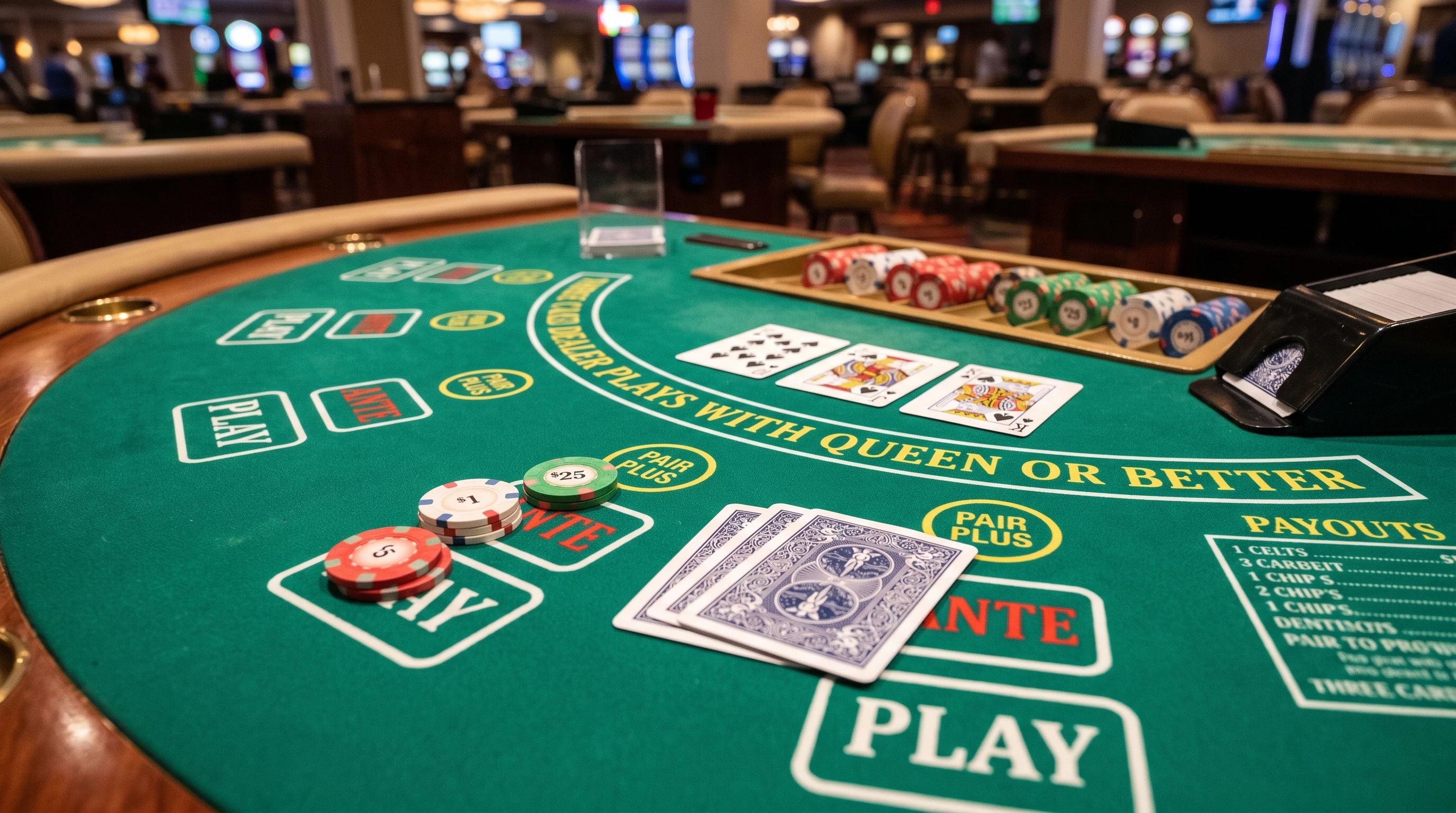
The layout is less intimidating than that of traditional poker games. I place my bets in clearly marked spots on the felt. Decisions are limited to playing or folding, so there’s not as much strategy or bluffing involved. This makes Three Card Poker a natural fit for anyone looking to dip their toes into casino table games without jumping into the deep end.
How the Hand Rankings Are Different
Three Card Poker uses unique hand rankings because only three cards are dealt, rather than the usual five. The probability of making certain hands changes in this version, so some hand strengths are flipped compared to what you might expect. For example, a straight beats a flush. This is because, with only three cards, it’s harder to get a straight than a flush.
Here’s the order of hands from highest to lowest in Three Card Poker:
- Straight Flush: Three consecutive cards, all of the same suit. Example: 5 of spades, 6 of spades, 7 of spades.
- Three of a Kind: All three cards have the same rank. Example: three Sevens.
- Straight: Three numerically consecutive cards of mixed suits. Example: 2 3 4 of different suits.
- Flush: Three cards of the same suit, not in sequence. Example: King 8 3 of hearts.
- Pair: Two cards of matching rank. Example: two Jacks.
- High Card: No matching ranks or sequence, just the highest card counts. Example: Ace 7 4 (Ace high).
Knowing these rankings really matters. I always make sure I double-check the order when I am new at a table, so I’m not surprised if a straight wins over a flush. If you want more info on hand probabilities and examples, check out the official rules at your casino, as they often post a chart right on the felt for quick reference.
💡 Did You Know?
Unlike traditional poker games, Three Card Poker uses a unique hand-ranking system where a straight beats a flush. This adjustment was made because three-card hands are statistically different from five-card poker hands. The change helps balance the game and gives players a better chance of making strong hands, which is one reason Three Card Poker became one of the most popular casino table games in the world.
Basic Rules and Playing the Main Game
The ante-and-play format is the main way to play Three Card Poker. It’s really direct. Here’s how I usually approach a round:
- Place Your Ante: I put a bet in the Ante circle. This starts the hand.
- Get Three Cards: The dealer hands me three cards, face down. I check my hand and compare it to the possible winning combinations.
- Decide to Play or Fold: If my hand looks promising, I place an equal amount to my ante in the Play spot. If my cards look weak, I fold and lose the ante bet.
- The Showdown: The dealer turns their three cards face up. The dealer needs at least a Queen high to qualify.
If the dealer’s hand doesn’t qualify with a Queen or better, my Ante bet pays even money (1:1), and the Play bet is returned as a push. If the dealer qualifies and I beat their hand, both Ante and Play bets pay 1:1. If the dealer qualifies and has a better hand, I lose both bets. When there’s a tie, both bets push, and I get my money back. Also, don’t forget about bonus payouts for top hands in the next section.
Understanding the Bonus Payouts
In addition to regular wins, Three Card Poker offers bonus payouts, such as the Ante Bonus. This adds excitement and extra chances to win, even if the dealer beats my hand or fails to qualify.
The typical Ante Bonus pay schedule is:
- Straight Flush: Pays 5 to 1
- Three of a Kind: Pays 4 to 1
- Straight: Pays 1 to 1
This payout happens automatically if I have one of these hands, regardless of the dealer’s cards. I always check the posted payout table on the felt before sitting down since these pay rates can vary slightly at different casinos. In some venues, you might also see a Trip Bonus or even special progressive jackpots that pay out for rare hands.
Popular Side Bets: Pair Plus and 6 Card Bonus
Most Three Card Poker tables give me the option to make extra bets that pay based only on my cards, not the dealer’s hand. The most common is Pair Plus. If I make this side bet, I’m betting that my three cards will include at least a pair or something better. The payouts are fixed and can reach up to 40-to-1 for a Straight Flush. Even if I lose the main game, this bet could still pay out.
Many casinos also offer a 6 Card Bonus. This merges my three cards with the dealer’s three to create the best possible five-card poker hand. This side bet pays if my combined cards make at least Three of a Kind, and the top payout is usually for a Royal Flush. These side bets give me the chance to win even if the main game doesn’t go my way, but the house edge is usually higher. I only bet these for fun, knowing the odds aren’t quite as favorable. Remember, it’s easy to get swept up in making extra bets, so play responsibly and keep your main bets as your steady strategy.
Strategies That Actually Work
Three Card Poker is not just about luck; there’s a simple rule for making the best decision on whether to stay in the hand. After a lot of research and playing dozens of hands, I’ve found that the best mathematical approach uses what’s called the Queen-6-4 rule. If my hand is Queen-6-4 or better, I should always stay in and make the Play bet. Any hand less than Queen-6-4 should be folded.
This means:
- If my highest card is Ace, King, or Queen (with at least a 6 and a 4 as other cards), I stay in.
- With lower high cards, I fold to cut my losses.
Playing every hand would burn through my chips quickly, but sticking to this guideline helps me keep the house edge as low as possible. Consistency is key. In the long run, following this simple system has helped me avoid common mistakes, and I’ve seen many new players benefit from sticking to it instead of guessing based on their gut feeling alone.
What Makes Three-Card Poker Friendly for Beginners?
Unlike Texas Hold ’Em or other casino poker games, Three Card Poker removes the stress of bluffing and the confusion of playing against many opponents. I focus only on beating the dealer, and the action never drags. The minimum bets for Ante and Play are often lower than most other table games, so my budget tends to last longer.
Dealers are usually happy to answer questions, and there aren’t a lot of complex rules to trip me up. The hand rankings, once learned, don’t change. That’s why I almost always suggest this game when friends are getting started in a casino for the first time. If you’re looking for a friendly introduction to casino poker, this game is about as stress-free as it gets while still giving good payout potential.
Costs and Payouts to Expect
Table minimums for Three Card Poker are usually lower than those for games like blackjack. Side bets do cost extra, but they add to the possible fun. Typical payouts for Ante and Play bets are always 1:1, while Side Bet and Bonus payouts depend on specific hand strengths. I find it really helpful to check posted tables near the dealer for precise payouts before I join a new game.
When it comes to the house edge, Ante and Play bets have a relatively low edge if I use basic strategy. Side bets like Pair Plus or 6 Card Bonus carry higher house advantages, so I treat those as occasional chances for a big hit instead of a steady strategy for winning. Remember to enjoy these for the entertainment value and not rely on them as a main way to win consistently.
So, Is Three Card Poker Right for You?
If you like quick rounds, straightforward decisions, and a relaxed way to try your luck against the casino, Three Card Poker is an easy game to recommend. I enjoy that learning the rules only takes a few minutes, and there’s enough action to keep things interesting even during short visits.
When I want more detailed knowledge, I sometimes look up payout charts or break down the odds for specific side bets. Experienced players may stick to bigger poker games, but nearly everyone I know ends up trying, and usually enjoying, at least a few rounds of Three Card Poker, especially when playing with friends or looking for a casual gaming session. Give it a shot the next time you’re at the casino—it might become your new go-to table game.
- How to Play Three Card Poker: Caesars Entertainment
- Three Card Poker Wikipedia
- Three Card Poker Strategy and Odds Wizard of Odds
Three Card Poker FAQ
What’s the best way to play my hand in Three Card Poker?
The most effective approach is to stay in with Queen 6 4 or better, and fold anything lower. This helps keep your losses in check and maximizes your odds of walking away with some winnings.
Is Three Card Poker good for beginners?
Yes, the game is easy to learn and moves quickly. You only make one decision each round: play or fold, so there’s not a lot to keep track of.
What’s the difference between Pair Plus and the main game?
Pair Plus is a side bet that’s paid based solely on your three cards, not on whether you beat the dealer. You can win this side bet even if you fold or lose the main hand. The main game pays out if your hand beats the dealer’s hand.
Are the payouts the same at every casino?
Payout tables may change from place to place, especially on side bets. I always check the posted payouts before sitting down. Some casinos offer higher bonuses for top hands.
What’s the house edge in Three Card Poker?
When playing the Ante and Play bets using the basic strategy, the house edge is generally around three to four percent. Pair Plus and other side bets usually have a higher house edge, sometimes as much as seven to eight percent or more.
Casino Guide Team
I write these guides to make your next casino trip easier and more enjoyable. Three Card Poker remains one of my favorite beginner games for relaxing, having fun, and maybe even getting a big payout now and then. If it sounds like fun, be sure to try it on your next Vegas Trip!